Key Takeaways
- Procrastination is an emotional regulation problem, not a time management issue — understanding this distinction is the first step toward change.
- Your brain is wired to avoid discomfort, which is why willpower alone rarely defeats procrastination.
- People who set specific goals are 42% more likely to achieve them — vague intentions lead to vague results.
- It takes an average of 66 days to form a new habit, so patience and consistency matter more than intensity.
- 80% of people who track their progress report better outcomes — measurement creates momentum.
- Systems beat motivation every time — building the right environment and routines is more reliable than waiting to "feel like it."
- Starting small is not a compromise; it's the strategy — gradual change outperforms dramatic overhauls in every long-term study.
You sit down at your desk. The deadline is tomorrow. You've known about this project for three weeks. And yet, here you are — opening a new browser tab, checking your phone, reorganizing your desk drawer, doing anything but the thing you need to do.
Sound familiar?
If it does, you're not alone, and more importantly, you're not lazy. Procrastination affects an estimated 20% of adults chronically, and virtually everyone experiences it at some point. It costs people promotions, damages relationships, harms health, and quietly erodes self-esteem with every broken promise we make to ourselves.
But here's what most productivity advice gets wrong: procrastination is not a character flaw. It's not about poor time management. And it certainly can't be fixed with a better to-do list app.
Procrastination is, at its core, a problem of emotional regulation. It's your brain choosing short-term mood repair over long-term gain. And once you understand the psychology behind it, you can finally start to dismantle the pattern — not with brute-force discipline, but with strategies that work with your brain instead of against it.
This article will walk you through the science of why you procrastinate, the hidden emotional triggers driving the behavior, and a practical, research-backed framework for overcoming it — starting today.

Understanding the Procrastination Brain: Why We Do What We Don't Want to Do
To overcome procrastination, you first need to understand what's actually happening inside your head when you put things off. The answer is more nuanced — and more forgiving — than you might expect.
The Emotional Core of Procrastination
Dr. Timothy Pychyl, one of the world's leading researchers on procrastination at Carleton University, defines procrastination as "the voluntary delay of an intended action despite knowing you'll be worse off for the delay." The key word there is voluntary. You're choosing it — but not because you're lazy or incompetent.
You're choosing it because the task triggers an uncomfortable emotion: anxiety, boredom, frustration, self-doubt, resentment, or overwhelm. Your brain, ever eager to protect you from discomfort, offers an escape route — a quick hit of dopamine from scrolling social media, snacking, or tidying your already-clean apartment.
This is what researchers call short-term mood repair. In the moment, procrastination works. You feel better. The problem is, it works like a credit card — you're borrowing relief from your future self, and the interest rate is brutal.
The Amygdala vs. The Prefrontal Cortex
Neuroscience has shown that procrastination involves a tug-of-war between two brain regions:
- The amygdala — your brain's threat detection center — perceives the task as a source of stress and triggers an avoidance response.
- The prefrontal cortex — responsible for planning, decision-making, and self-regulation — tries to keep you on track.
When you're tired, stressed, or emotionally depleted, the amygdala wins. This is why you're more likely to procrastinate in the evening, during periods of high stress, or when you're dealing with tasks that feel ambiguous or high-stakes.
The critical insight here: procrastination is not evidence that something is wrong with you. It's evidence that your emotional brain is doing exactly what it evolved to do — avoid perceived threats. The solution isn't to fight your brain harder. It's to reduce the emotional charge around the task.
The Procrastination-Guilt Cycle
Procrastination rarely exists in isolation. It typically follows a predictable and destructive cycle:
- Avoidance — You put off the task.
- Temporary relief — You feel better in the short term.
- Guilt and anxiety — As the deadline approaches, negative emotions intensify.
- Self-criticism — You label yourself as lazy, undisciplined, or incapable.
- Increased avoidance — The task now carries even more negative emotion, making it harder to start.
- Last-minute panic — You finally do the work under extreme stress, reinforcing the belief that you "need" pressure to perform.
This cycle is self-reinforcing. Each trip around the loop deepens the neural pathways associated with avoidance and erodes your confidence. Breaking the cycle requires interrupting it at specific, strategic points — which we'll cover in the sections ahead.
The Five Hidden Triggers of Procrastination
Research has identified five core characteristics of tasks that reliably trigger procrastination. Understanding which trigger is affecting you makes all the difference in choosing the right counter-strategy.
1. Boredom
Tasks that feel tedious or unstimulating are prime procrastination targets. Your brain craves novelty and engagement — filling out expense reports or organizing files doesn't deliver that.
Counter-strategy: Pair boring tasks with something enjoyable. Listen to a podcast while doing data entry. Work at a café instead of your desk. Create a small reward system — complete the boring task, then enjoy 10 minutes of something you love.
2. Frustration
When a task feels difficult or involves a skill you're still developing, frustration builds quickly. Rather than sit with that discomfort, your brain pulls you toward easier activities.
Counter-strategy: Break the task into absurdly small steps. Instead of "write the report," start with "open the document and write one sentence." Research shows that starting small and building gradually is more effective than trying to change everything at once. Once you begin, frustration often dissolves.
3. Ambiguity
Vague tasks are procrastination magnets. "Work on the project" gives your brain nothing concrete to latch onto, so it defaults to avoidance.
Counter-strategy: Spend two minutes clarifying the very next physical action. Not the whole project — just the next step. "Open the spreadsheet and update the Q3 column" is actionable. "Work on finances" is not. Studies show that people who set specific goals are 42% more likely to achieve them.
4. Lack of Personal Meaning
When you can't connect a task to something you value, motivation evaporates. This is especially common in workplaces where assignments feel arbitrary or disconnected from your goals.
Counter-strategy: Actively reframe the task. Ask yourself: Who benefits from this? What skill am I building? How does this connect to something I care about? Even a small connection to personal values can shift your emotional relationship with the task.
5. Lack of Structure
Without deadlines, accountability, or clear boundaries, tasks expand and drift. This is why personal projects — writing a novel, learning a language, getting in shape — are so vulnerable to procrastination.
Counter-strategy: Create artificial structure. Set a timer for 25 minutes (the Pomodoro Technique). Tell someone your plan. Schedule the task in your calendar like an appointment. Having support and accountability significantly increases success rates.

A Proven Framework for Overcoming Procrastination
Knowing why you procrastinate is necessary but not sufficient. You need a practical system — a set of repeatable strategies that work even on days when motivation is nowhere to be found. Here's a framework built on the best available research.
Step 1: Catch the Urge Before It Catches You
The moment between feeling the impulse to avoid and actually opening Instagram is your window of opportunity. Mindfulness research suggests that simply naming the urge can reduce its power.
Try this: When you notice the pull to procrastinate, pause and say to yourself, "I'm feeling the urge to avoid this because it feels [boring/hard/overwhelming]." Don't judge the feeling. Don't try to push it away. Just acknowledge it.
This tiny act of awareness creates a gap between stimulus and response — and in that gap lies your freedom to choose differently.
Step 2: Shrink the Task Until It's Laughably Easy
The biggest mistake procrastinators make is trying to motivate themselves to do the entire task. That's like trying to eat a whole meal in one bite.
Instead, ask yourself: "What's the smallest possible version of this I could do in two minutes?"
- Can't face writing the paper? Open the document.
- Can't face the workout? Put on your shoes.
- Can't face the difficult conversation? Write one sentence about what you want to say.
This works because of a psychological principle called the Zeigarnik Effect — once you start a task, your brain naturally wants to complete it. The hardest part is almost always the beginning.
Step 3: Design Your Environment for Action
Relying on willpower is like relying on the weather — it's unreliable and completely outside your control. What you can control is your environment.
Reduce friction for desired behaviors:
- Keep your work materials visible and ready
- Close unnecessary browser tabs before you start
- Put your phone in another room
- Use website blockers during focused work periods
Increase friction for avoidance behaviors:
- Log out of social media accounts
- Remove entertainment apps from your phone's home screen
- Set up your workspace the night before
Creating systems rather than relying on motivation is one of the most effective strategies for beating procrastination. Your environment shapes your behavior far more than your intentions do.
Step 4: Use Implementation Intentions
An implementation intention is a specific plan that follows the format: "When [situation], I will [behavior]."
Examples:
- "When I sit down at my desk at 9 AM, I will work on the report for 25 minutes."
- "When I feel the urge to check my phone during work, I will take three deep breaths instead."
- "When I finish lunch, I will spend 10 minutes on my side project."
Research by psychologist Peter Gollwitzer has shown that implementation intentions dramatically increase follow-through because they pre-load your brain with a specific response to a specific cue. You're no longer relying on in-the-moment decision-making — you've already decided.
Step 5: Track and Measure Your Progress
What gets measured gets managed. 80% of people who track their progress report better outcomes, and the reason is straightforward: tracking creates awareness, and awareness drives change.
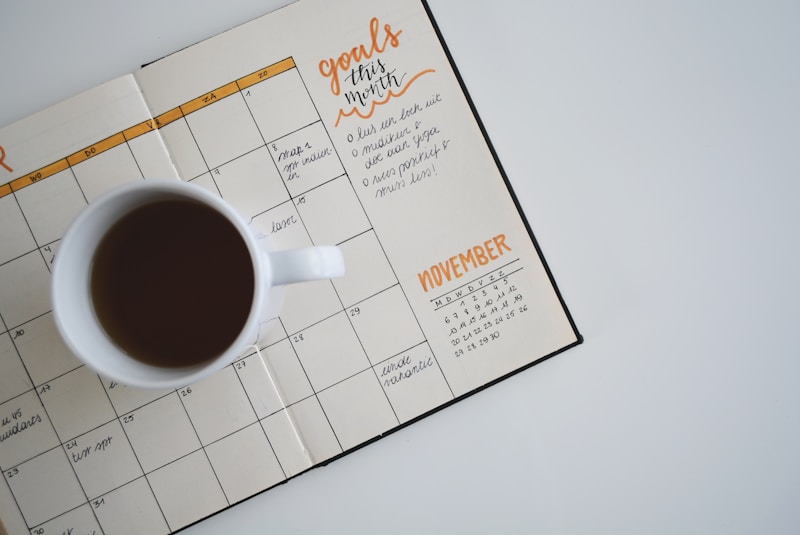
You don't need a complex system. A simple habit tracker — a calendar where you mark an X for each day you follow through — creates a visual chain that you'll become motivated to maintain. Jerry Seinfeld famously used this method to write jokes daily, calling it "Don't Break the Chain."
Track:
- Days you worked on your key task (even for 5 minutes)
- Your emotional state before and after working
- What triggered procrastination when it happened
- What strategy helped you start
This data becomes invaluable over time. You'll spot patterns, identify your most productive conditions, and build evidence that you can follow through — which directly combats the self-doubt that fuels procrastination.
Common Mistakes to Avoid
Even with the best intentions, people frequently sabotage their own progress by falling into these traps:
1. Waiting for Motivation to Strike
This is the single most common mistake. Motivation follows action — it doesn't precede it. If you wait until you feel like doing the work, you'll wait forever. Start anyway, even badly, and motivation will often catch up.
2. Setting Goals That Are Too Ambitious
Declaring "I'll never procrastinate again" is a setup for failure. It takes an average of 66 days to form a new habit, and that's for simple behaviors. Complex behavioral change takes longer. Start with one small commitment and build from there.
3. Using Guilt as a Motivator
Beating yourself up after procrastinating feels productive, but research shows it actually increases future procrastination. Self-compassion — treating yourself with the same kindness you'd offer a friend — is far more effective. A study by Dr. Fuschia Sirois found that self-compassion reduces procrastination by lowering the negative emotions associated with a task.
4. Confusing Busyness with Productivity
Some procrastinators stay incredibly busy — just not on the things that matter most. Reorganizing your email inbox, attending unnecessary meetings, or doing minor tasks while avoiding the important ones is called productive procrastination, and it's one of the sneakiest forms of avoidance.
5. Ignoring the Emotional Component
Buying another planner, downloading another productivity app, or creating another elaborate system misses the point entirely if you haven't addressed why you're avoiding the work. Address the emotional trigger first, then layer on the tools.
6. Going It Alone
Having support and accountability significantly increases success rates. Yet many people treat procrastination as a private shame. Tell someone your goal. Find an accountability partner. Join a community. The social dimension of change is not optional — it's essential.
Getting Started: Your First Seven Days
Theory without practice is just entertainment. Here's a concrete, day-by-day plan to begin breaking your procrastination patterns this week.
Day 1: Identify Your Trigger Pick the task you've been procrastinating on most. Write down which of the five triggers (boredom, frustration, ambiguity, lack of meaning, lack of structure) is most responsible. Just naming it is your task for today.
Day 2: Shrink It Down Define the smallest possible first step for your task — something you can do in under five minutes. Write it down as a specific, physical action.
Day 3: Set Your Implementation Intention Write a "When/Then" plan for completing your small step. Specify the time, place, and cue.
Day 4: Design Your Environment Spend 10 minutes reducing friction. Set up your workspace, remove distractions, prepare materials. Make the right action the easy action.
Day 5: Do the Thing Execute your small step. Time yourself. Notice how you feel before, during, and after. Write down what you observe.
Day 6: Tell Someone Share your goal with one person — a friend, colleague, or online community. Ask them to check in with you next week.
Day 7: Reflect and Plan Review your week. What worked? What triggered avoidance? Set your intention for next week, building slightly on what you did this week.
Remember: research shows consistent practice leads to better outcomes. You don't need to be perfect. You need to be consistent.
Frequently Asked Questions
How long does it take to see results when working on procrastination?
Most people notice a shift within the first one to two weeks of consistent practice — not because the procrastination disappears, but because they begin catching it sooner and recovering faster. Meaningful, sustained change typically takes two to three months, which aligns with the research showing it takes an average of 66 days to form a new habit. The key is to measure progress not by perfection, but by your ability to start despite resistance.
What are the most common mistakes people make when trying to stop procrastinating?
The biggest mistakes are: (1) relying on willpower and motivation instead of systems and environment design, (2) setting overly ambitious goals that trigger overwhelm, (3) using self-criticism as a motivational tool (it backfires), and (4) treating procrastination as a time management problem rather than an emotional regulation problem. Addressing the underlying emotional trigger is always more effective than adding more structure on top of an unexamined pattern.
How do I stay motivated when progress feels slow?
First, decouple action from motivation. Motivation follows action, not the other way around. Second, track your progress — 80% of people who track their progress report better outcomes because tracking makes invisible progress visible. Third, zoom out. Compare yourself to where you were a month ago, not to where you think you should be. Fourth, find a community or accountability partner. Social connection is one of the most powerful sustainers of behavior change.
What resources do I need to get started?
Remarkably few. You need: (1) a way to write things down — a notebook, a notes app, anything, (2) a timer for focused work sessions, (3) a simple habit tracker, and (4) optionally, one person who will check in with you. The most important resource is not a tool — it's the willingness to start imperfectly. Resist the urge to spend hours researching the "perfect" system. That's often procrastination in disguise.
How do I know if I'm making progress?
You're making progress if: (1) you're catching the urge to procrastinate sooner than before, (2) the gap between intention and action is shrinking, (3) you're completing tasks before the last-minute panic window, (4) your self-talk is becoming less critical and more constructive, and (5) you're occasionally starting tasks without a struggle. Progress in overcoming procrastination is rarely linear — expect good days and bad days. The trend line matters more than any single data point.
Can procrastination ever be a sign of something deeper?
Yes. Chronic, severe procrastination can be associated with ADHD, depression, anxiety disorders, and perfectionism. If you've tried multiple strategies consistently for several months and still find yourself unable to make progress, it's worth speaking with a mental health professional. There's no shame in this — in fact, getting the right diagnosis can be the single most transformative step you take. What feels like a willpower problem may actually be a treatable condition.
Conclusion: The Path Forward
Procrastination is not a life sentence. It's a pattern — and patterns can be changed.
But they can only be changed if you approach them with the right understanding. Procrastination isn't about laziness, poor character, or insufficient discipline. It's about a brain that's doing its best to protect you from discomfort, using strategies that worked well for survival but poorly for modern life.
The path forward isn't about fighting yourself harder. It's about:
- Understanding your triggers — knowing why you avoid specific tasks
- Shrinking the first step — making it so small that resistance dissolves
- Designing your environment — making the right action the easy action
- Building systems — creating structures that don't depend on how you feel
- Tracking your progress — making the invisible visible
- Practicing self-compassion — treating setbacks as data, not evidence of failure
- Finding accountability — connecting with others on the same journey
You don't need to overhaul your entire life this week. You need to do one small thing differently today. Then do it again tomorrow. And again the day after that.
Start with the smallest step. Start now. Start imperfectly.
That's not just good advice — it's what the science says works.
References
- Comprehensive Guide to The Psychology of Procrastination and How to Finally Overcome It — Expert advice on understanding and overcoming procrastination.
- The Psychology of Procrastination and How to Finally Overcome It: What Research Says — Psychological research on procrastination and evidence-based strategies.
- The Science Behind The Psychology of Procrastination and How to Finally Overcome It — Scientific perspective on the neuroscience of procrastination.
- The Psychology of Procrastination and How to Finally Overcome It Best Practices — Professional insights for overcoming procrastination in the workplace.
- Getting Started with The Psychology of Procrastination and How to Finally Overcome It — Beginner's guide to understanding and addressing procrastination habits.